


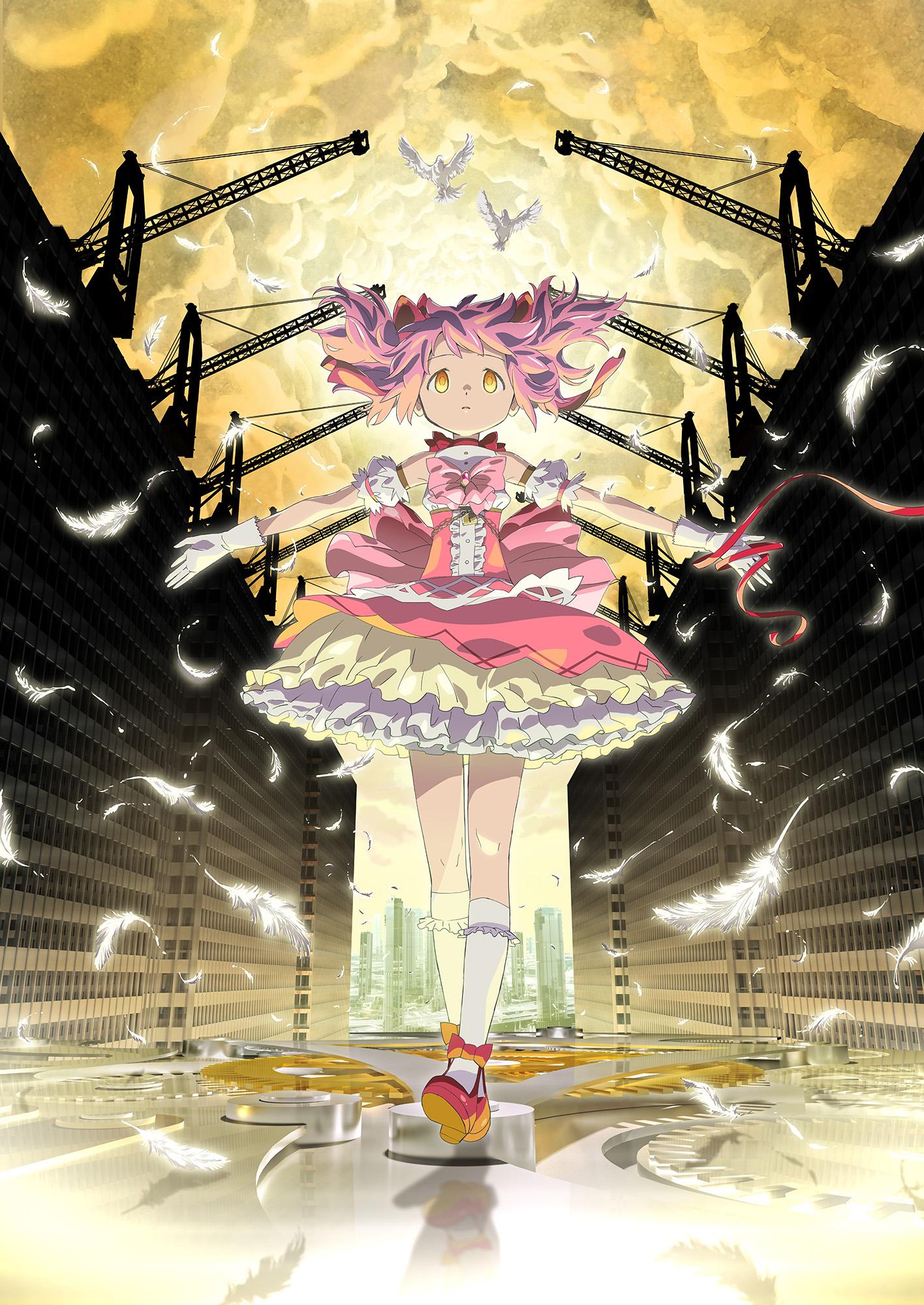






Madoka Kaname, a resident of the provincial city of Mitakihara, is a slightly shy—
and otherwise perfectly ordinary—middle school girl. However, upon learning of the existence of “Magical Girls“—girls who fight against Witches—she finds herself drawn into their conflict.
and otherwise perfectly ordinary—middle school girl. However, upon learning of the existence of “Magical Girls“—girls who fight against Witches—she finds herself drawn into their conflict.
Distressed by the sight of magical girls being wounded and falling
in battle, Madoka makes a wish to Kyubey: “I want to erase all Witches before they are born.” Thus, Madoka transcends
into a supernatural concept known as the “Law of the Cycle,” and through her power, the world is remade into one where
Witches simply do not exist.
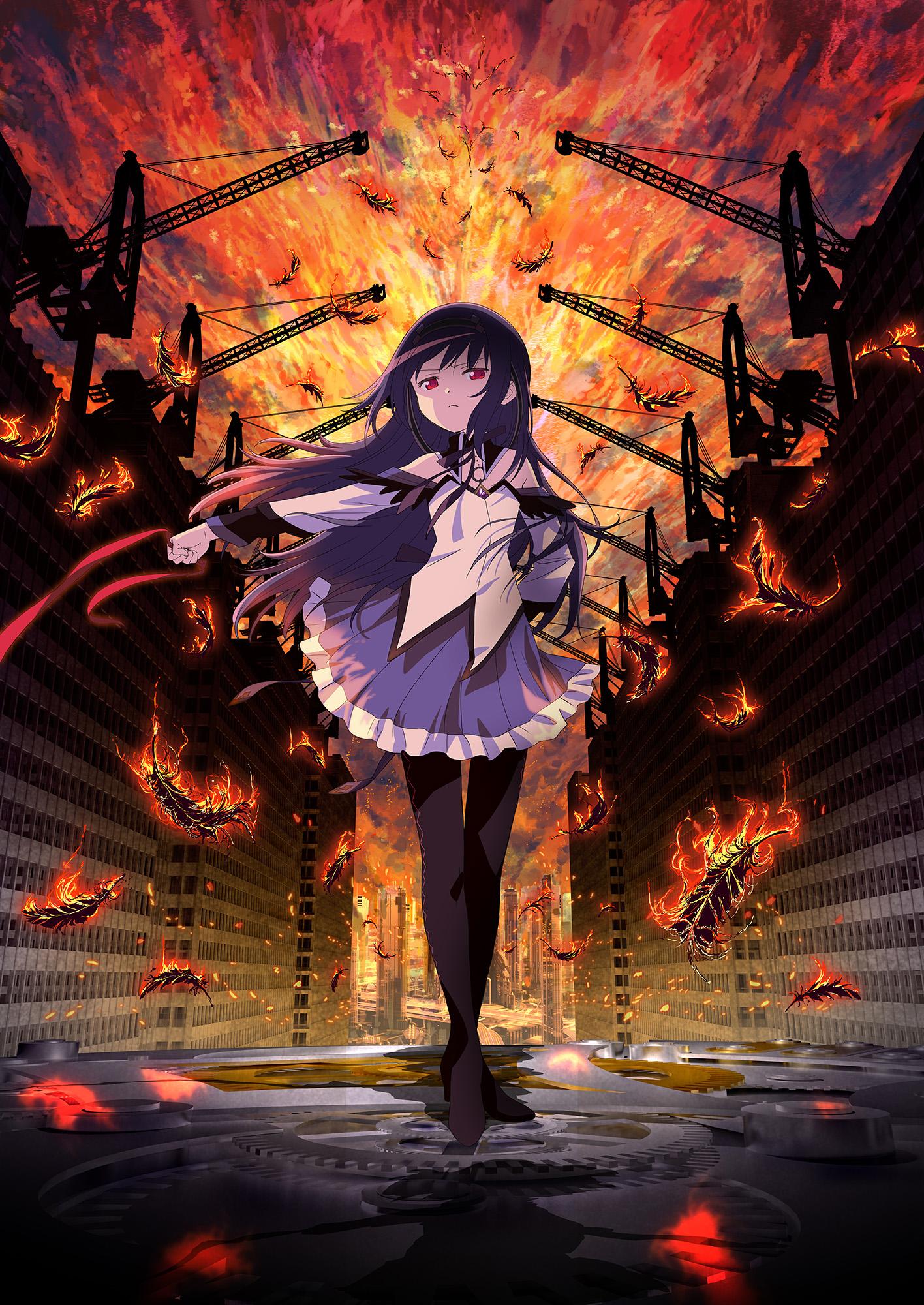
Bearing Madoka's final will in her heart, Homura Akemi vows to continue the fight against
the “Wraiths”—entities that have emerged to take the place of the vanished Witches.
Dreaming of the day she might be guided by the Law of the Cycle, she fights on... Homura lived out her daily life as a
Magical Girl. Though her days were filled with battles against “Nightmares,” they were also days filled with joy
alongside her companions. Yet, she began to sense a subtle discord—a tear in the fabric of her daily routine—until she
finally arrived at a definitive, undeniable truth. That truth was the existence of “Madoka Kaname”—someone who, in this
world, should not exist at all. This world, she realized, was a fabrication—a false reality conjured by her own mind as
she teetered on the brink of transforming into a witch herself—created solely to reclaim the days she once shared with
Madoka.
The Magical Girls joined forces to thwart the machinations of Kyubey, who, having uncovered this secret, sought
to exploit it for their own ends. Yet, in doing so, they were forced to confront and accept a painful reality: that
Homura was indeed transforming into a witch, and that Madoka, as the Law of the Cycle, existed as a being detached from
the world itself. Consequently, in that final, pivotal moment—desperate not to lose Madoka forever—Homura chose to
become a Demon. By dragging Madoka—a being akin to a god—down from her divine pedestal, Homura seized the power to
remake the world once more, this time with her own hands.
Lately, a certain rumor has begun to circulate—whispered quietly among the girls of Mitakihara. The “Lizard Phone” grants
wishes—in exchange for battling the curses that plague this world.
Meanwhile, a series of anomalies had begun to unfold: a “girl without a Soul Gem” was hunting down Wraiths. Homura gazed
upon this scene with serene composure; reigning as the Demon of this world, she held absolute dominion over all things.
—Or so it was supposed to be.
But then, an entity appeared—one that would put an end to that twisted daily existence. There was the birthplace of all
Witches—Nazukasokotsune; the collective of multiple Witches that had once tormented Homura—Walpurgisnacht; and two
magical girls seeking the Law of the Cycle.
The girls declared: “We will not forgive Homura Akemi”.
The girls declared: “We will not forgive Homura Akemi”.
In a world stripped of the Law of the Cycle,
the destinies of the Magical Girls begin to turn once more.
the destinies of the Magical Girls begin to turn once more.